
What Do Security Guards Do at Schools?
Last Updated: October 26, 2026
Quick Summary
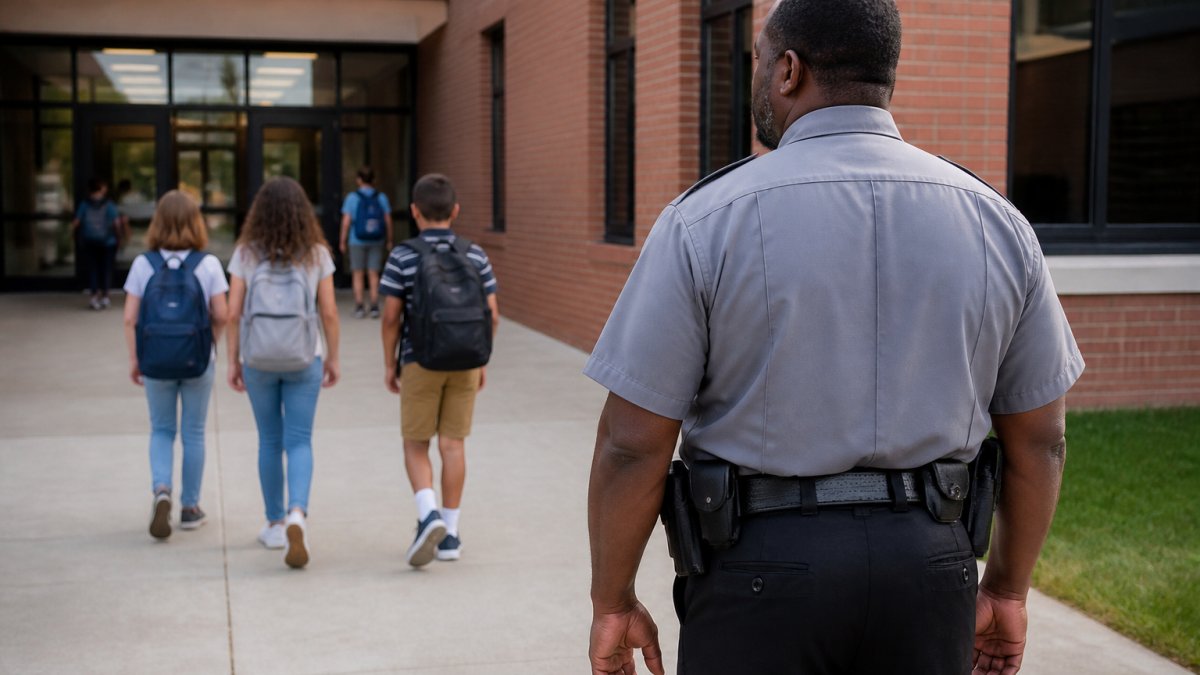
Security guards at schools control access by checking IDs, logging visitors, and confirming every arrival has a legitimate reason to be on campus. They also patrol the property, watch for unusual activity, and respond to incidents before small problems become crises. Their job follows the school day, shifting from arrival traffic and door control to perimeter checks, lunch, and dismissal.
- Only 61% of public schools had one or more security staff members present at least once a week in 2026.
- School security officer qualifications should cover de-escalation, youth interaction, emergency communication, and report writing.
- Unarmed officers fit most K-12 campuses because primary risks are access breaches and disruptive visitors.
- The most common patrol failure is an officer who stays parked in one spot all day.
- Ignore the lowest bid, since a rate that undercuts everyone usually means less training and supervision.
Table of Contents
- What Security Guards Actually Do on a School Campus
- School Security Officer Qualifications That Separate Trained Staff From Warm Bodies
- Armed vs. Unarmed School Security: Which Model Fits Your Campus
- How School Campus Security Patrol Works Across a Full Day
- A School Security Company Vetting Checklist for Administrators
- What to Ignore When Comparing School Security Guard Services
- Request a Campus Security Assessment for Your School
- Frequently Asked Questions
What Security Guards Actually Do on a School Campus
Only 61% of public schools had one or more security staff members present at least once a week in 2026, down from 65% in 2019-20, according to Building Security's school security statistics. That gap matters, because the real job of security guards goes far beyond standing near a door. Security guard services for schools are a structured safety function: controlling who enters, watching what happens, and responding before a small problem becomes a crisis. Below, we break down what the job actually involves, how to vet a provider, and how to compare armed and unarmed models for a campus in Sarasota, FL.
Access Control and Visitor Management
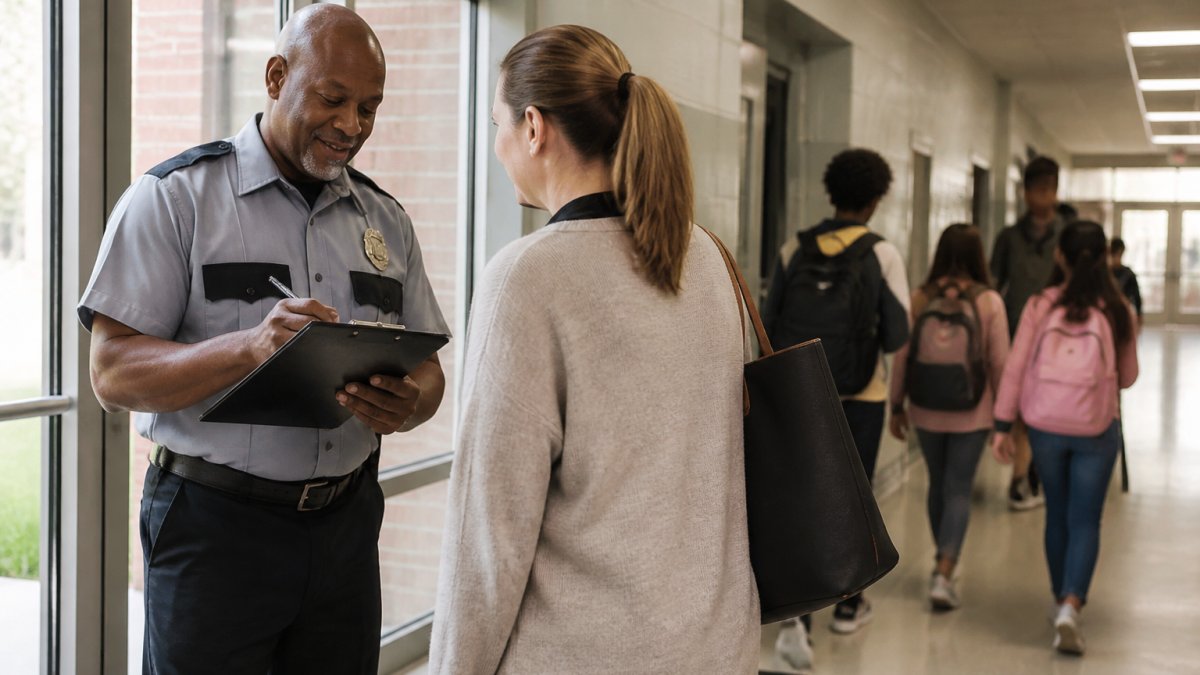
Access control is the first job, and it's the one that prevents the most incidents. A trained officer checks IDs, logs visitors, and confirms every arrival has a legitimate reason to be on campus. RAND survey data show that nearly all public schools have some form of security infrastructure, with visitor sign-in systems as a common example (EXTERNAL_LINK: RAND's school safety research | rand.org). The difference between a sign-in sheet and a real access-control post is enforcement. Someone has to check the badge, call the front office, and say no when the answer is no.
Observation, Reporting and Response
Observation is where weak guards and strong guards split apart. A warm body sits in a car. A professional walks the property, learns which doors should be locked, and notices the same unfamiliar vehicle on its second pass. The CISA K-12 School Security Guide describes how detection on school grounds should trigger other security layers, including automatic door locks and lockdown procedures. A guard is often the human link that starts that chain.
School Security Officer Qualifications That Separate Trained Staff From Warm Bodies
Ask what training an officer completed before the first shift, not after. School security officer qualifications should cover de-escalation, youth interaction, emergency communication, and report writing. A guard who can calm a tense hallway conversation is worth more than one who can only call for backup. Three things we check on every assignment:
- Current state licensing and background screening
- Documented de-escalation and emergency response training
- A written post order specific to your campus
What most guides miss is the post order. A generic officer can't follow a plan nobody wrote. Your provider should build site-specific instructions covering bell schedules, after-hours access, and who to call at 2 a.m.
Armed vs. Unarmed School Security: Which Model Fits Your Campus
Unarmed officers fit most K-12 campuses, because the primary risks are access breaches and disruptive visitors, not armed intruders. Armed vs. unarmed school security comes down to your threat assessment, your insurance, and your community's expectations. A National Academies review notes that research on individual measures like door locks offers limited but relevant insight, which is a warning against treating any single tactic as proven on its own (EXTERNAL_LINK: National Academies review | nationalacademies.org).
| Model | Best For | Key Trade-off |
|---|---|---|
| Unarmed officer | Most K-12 campuses, visitor control | Limited response to armed threats |
| Armed officer | High-risk sites, defined threat profile | Higher cost, added liability and training |
| Mobile patrol | After-hours coverage, multiple sites | Not continuously on campus |
Best for: districts wanting visible deterrence and access control without firearms on campus. Skip if: your threat assessment specifically calls for an armed response capability.
How School Campus Security Patrol Works Across a Full Day
School campus security patrol follows the school day, not a fixed loop. A good officer adjusts position and attention to what's happening: arrival traffic, class transitions, lunch, dismissal. Guarding services made up 37.71% of the education security market in 2025, per Research and Markets, which tells you how central staffing is to any campus plan.
Before Bell, During Class and After Dismissal
Before the bell, the focus is traffic and door control. During class, it shifts to perimeter checks and camera monitoring. After dismissal, the risk moves to the parking lot and the pickup line. Watch out: the most common failure is an officer who stays parked in one spot all day, because a predictable post is an easy one to work around.
A School Security Company Vetting Checklist for Administrators
Use this school security company vetting checklist before you sign anything. It's short on purpose.
- Confirm state licensing and insurance certificates
- Ask for the actual training curriculum, not a summary
- Request references from comparable campuses
- Review the post orders they'd write for your site
- Ask how they document patrols and reports
- Confirm supervision frequency and escalation contacts
- Check the contract's termination and replacement terms
A common mistake is skipping the references. Ask a peer in Sarasota County how fast the provider replaced an officer who didn't fit. The answer tells you more than any brochure.
What to Ignore When Comparing School Security Guard Services
Ignore the lowest bid first. A rate that undercuts everyone usually means less training, less supervision, or both. Security guard services for schools live or die on accountability, so compare how each provider documents patrols, reports incidents, and supervises officers. Also ignore promises about response times that no one measures. Ask for the reporting system instead.
The one thing we'd push back on: don't judge a provider by the uniform. Judge them by what happens on week six, when the novelty wears off and the officer either knows your campus or doesn't.
Request a Campus Security Assessment for Your School
Every campus has different doors, schedules, and risks, which is why a walkthrough beats a sales call. Sarasota Security Patrol has provided customized security solutions since 1962, combining trained personnel with local management. We build site-specific post orders, support a smooth transition from your current provider, and stay accountable through documented reporting. If you're searching for security guard services near me in the Sarasota area, start with an assessment. then get started with Sarasota Security Patrol and put a real campus safety plan in place.
Frequently Asked Questions
What do security guards do at schools?
They control who enters and leaves, watch for unusual behavior, document incidents and coordinate with administrators and local police. Much of the job happens at doors and parking lots rather than in hallways. The CISA K-12 School Security Guide describes detection on school grounds activating other layers, including automatic door locks and lockdown procedures, so guards are one part of a connected system rather than a standalone fix.
Should schools hire armed or unarmed security guards?
Most K-12 campuses in Florida start with unarmed officers because the role is deterrence, access control and quick reporting rather than enforcement. Armed vs. unarmed school security is a policy decision your board and insurer should weigh, not just a budget line. Ask what training and licensing the armed model requires, who authorizes use of force, and how the officer coordinates with local law enforcement before you sign.
What qualifications should school security guards have?
Look for state licensing, a clean background check, documented training in de-escalation and emergency procedures, and experience with minors. Ask how often refresher training happens and how the provider verifies attendance. School security officer qualifications should also include familiarity with your campus layout, visitor protocols and lockdown drills. NCES reports roughly 96% of public schools run lockdown drills, so guards should know the drill sequence cold.
How much do school security guard services cost?
Pricing depends on coverage hours, the number of posts, armed or unarmed status and whether you need patrol vehicles. No single figure fits every campus. Ask providers for a written scope that lists hours, posts and reporting requirements before you compare quotes, and request current pricing directly from the provider you are evaluating.


